
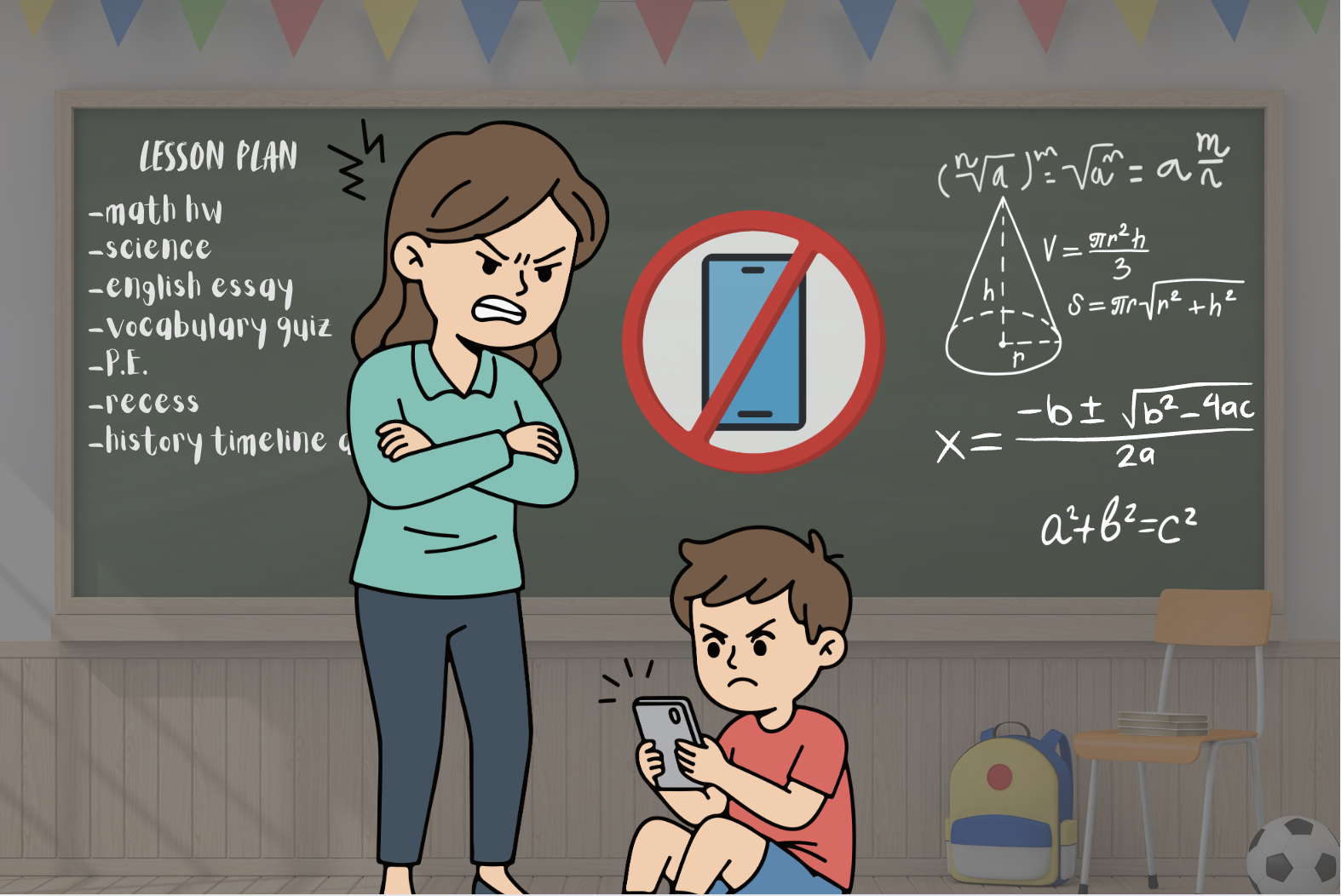
Phone restrictions at Edison High School have sparked many debates, but the conversation should not be framed as a simple false dilemma between freedom and control. Edison High School’s (EHS) current policy requires phones to be “off and away” during class while allowing limited access throughout the day, striking a reasonable balance. While a complete statewide ban on phones can be justified, it goes further than what is truly necessary here at EHS.
The school’s use of phone pockets and classroom restrictions helps reduce distractions without completely removing student access to their devices. Although enforcement varies slightly by teacher, the overall structure remains effective.
EHS has flexible phone policies, as there are still times when phones are accessible (during study hall, gym, lunch, beginning/end of class, and during passing), and certain teachers are flexible and reasonably lenient about this policy. This flexibility allows students to manage their responsibilities while still maintaining focus during instructional time. Unlike schools that use Yondr pouch systems that fully lock phones away, EHS does not completely restrict access for the entire day. Many teachers also do not require phone pickets and instead enforce a simple rule of keeping phones put away and out of sight during instruction. This allows students to maintain focus during class while still having reasonable access to their phones when appropriate, creating a balance between responsibility and accountability.
Reducing distractions is the core purpose of the policy, and on that front, the current system succeeds. Smartphones are designed to capture attention, and even quick checks can interrupt learning. By keeping phones out of sight during class, EHS minimizes these disruptions while avoiding the frustration that comes with an absolute ban.
Still, it’s important to note that studies from the National Library of Medicine indicate that the mere presence of a phone can reduce attention and increase the urge to check it, which explains the push in New Jersey for a statewide ban on school cell phone use. The policy reflects a broader effort to improve learning environments, and schools such as Lenape High School have already adopted strict penalties to enforce the bill, with consequences that go beyond simple warnings. At Lenape High School , a phone can be confiscated on the first offense, and repeated violations may require a parent pickup or disciplinary action. Some teachers even require phones to be stored in designated areas for the entire school day—more rigid enforcement.
While this statewide approach can be justified by research and long-term academic goals, it may be excessive for students who already demonstrate responsible phone use. Higher levels of education come with increased expectations for focus. Still, these expectations do not necessarily require eliminating phone access.
EHS’s current policy acknowledges this necessity for balance. It limits distractions without completely removing autonomy and prepares students for environments where self-regulation is expected. A total ban prioritizes concentration over convenience, but it also risks treating all students as equally irresponsible, regardless of their habits. Additionally, phones can serve important practical purposes during the school day, such as coordinating transportation, responding to family emergencies, or accessing digital resources. A full ban risks removing these practical benefits. This becomes especially problematic in the context of school emergencies, which occur more frequently in the US compared to other countries. During lockdowns and threats, students often rely on their phones to contact emergency services or communicate with family members for real-time updates. Restricting access through Yondr pouches or distant classroom phone pockets can slow down this communication at moments when every second matters. Recently, current events have shown that students were able to alert authorities or share critical information because they had immediate access to their phones. Removing that possibility creates undue anxiety and a safety gap that a strict statewide band fails to address.
Another factor often overlooked in this debate is how phone policies prepare students for life beyond high school. In college and the workplace, individuals are rarely subjected to complete phone bans. Instead, they are expected to manage distractions independently and make responsible decisions about when phone use is appropriate. EHS’s current policy reflects this reality by encouraging self-discipline rather than enforcing total restriction. This approach helps students build long-term habits rather than relying on external control, which is a skill they will need in every personal and professional environment after graduation.
In the end, EHS has found a system that mostly works. Phone pockets and classroom limits reduce distractions while still trusting students to handle limited freedom. A statewide ban may be understandable and even effective, but at EHS, structured limits are the better solution. The school benefits from a policy that respects student maturity instead of assuming a lack of discipline in the student body. A complete ban might look efficient on paper, but it ignores the reality that students learn best when they are given responsibility. EHS’s approach shows that balance, not severity, is what actually creates a productive learning environment. Not everything needs to be taken to the extreme for it to work effectively.