
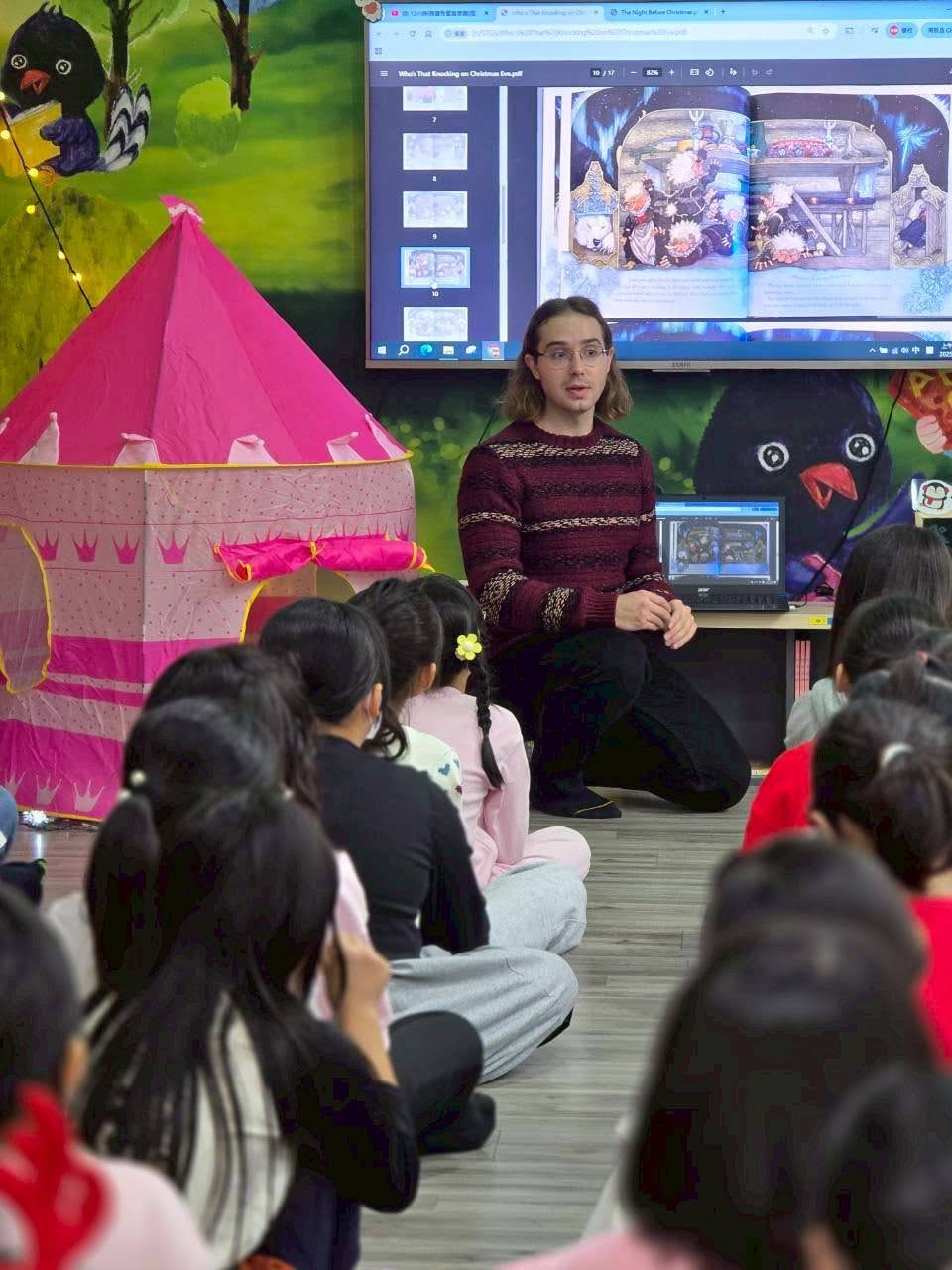
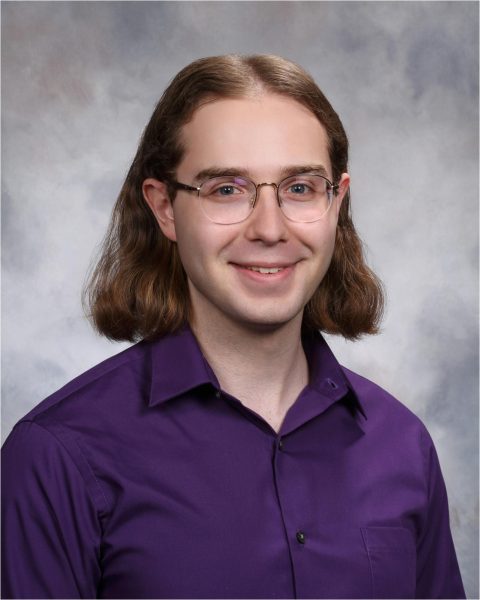
Valedictorian from five years past, Evan Keeton ’21, went on to attend Rutgers-New Brunswick, graduating this spring, where he studied math and Asian studies. A former Fulbright scholar in Taiwan, he now works as an English teaching assistant there in local elementary schools in Taitung County.
EE: How did you handle the transition from EHS to Rutgers, and then moving to Taiwan?
EK: First of all, every year at Rutgers was so different and a learning experience. I think certain things have helped me stay grounded throughout all of that. One thing that helped a lot was being from Edison and then going to Rutgers; it’s very easy to come home. It was easy to stay connected to my parents at the time because of proximity, and then, certain habits or routines that you feel are very important to you.
I have a background in dance; I’ve been a dancer for pretty much my whole life, so I was not certain whether or not I’d be able to maintain that going into Rutgers, but I found classes in the dance department and found clubs that I was able to join at Rutgers. I quickly found that sort of through line that was this consistent routine that I did in high school and also college, which is very important to me. I think I quickly latched onto that, and it became something that kind of helped me feel like me. Many things around me were changing, and I was getting used to new environments.
Now I’m in Taiwan, I’ve been very grateful to have found a dance class that I’m taking, just once a week, but that’s providing me a little bit of that same sense of community and environment. That’s been a huge comfort through so many different changes in the past couple of years.
EE: COVID hit during your junior and senior years. How did you learn to cope with those difficulties, and what challenges did you have to face?
EK: One thing that was very important for me was being able to talk about any of the challenges that I was having with my parents, or even just talk through, logistically, school just closed, the dance school just closed. They want to have classes online. We don’t really have, like, a dance room in the house. The question that was asked was “How can we, what can we adjust to make that happen?” and so we’re able to sort of come up with a plan where we could move some furniture around in a temporary way to give me enough space to dance on Zoom. Being able to talk about it with my parents and have them really be invested in making sure that I was able to do what I wanted to do, their support really helped me a lot. While being accommodating, my parents might be trying to work or have a meeting, but he’s going to be singing in the basement. And just accepting that that’s the reality of the pandemic, the fact that they were willing to accommodate all of that and support that, definitely helped a lot with the logistical and mental challenges of going through the pandemic.
EE: What were your favorite moments from your time at EHS?
EK: The first one to come up would just be various moments with friends, especially for me, I think, kind of the unexpected moments where someone says something really funny, or it’s the end of the year, you’re playing a game in class, and everybody gets really into the game. Just little things like that really kind of make the memory of the school sparkle a little bit more.
Another memory that really sticks out for me is our graduation, which in the pandemic, turned out to be a blessing in disguise. We had our graduation outside on the football field, out on the track. And our graduation was scheduled for 5 in the afternoon, maybe, and it was ending just as the sun set. The weather was beautiful. It was not that hot, but the sky was totally clear, so it was a great day to be outside, and everyone was there together celebrating the fact that we made it not only through four years but also through the pandemic, and we’re all going on to whatever we’re doing next. The way things lined up there made the fact that the past year and a half, which had been so unprecedented, just a bit better, and that was another really special memory for me. But the people and special moments like that when it all comes together are some of my favorite things to look back on from EHS.
EE: How did your experiences at EHS help you navigate your future?
EK: Going into Rutgers, I was very grateful to have had to go in with a strong foundation in a lot of different areas from my time at EHS. I’d taken several AP classes, including AP. Lang, AP Lit, and a bunch of the AP sciences. On the one hand, it was very convenient because it gave me a lot of core credits, which gave me a lot of freedom to take classes that might not count if I had to spend half of my college credits just finishing the core. I wouldn’t have had the time to take a class on the writing of environmental issues in Southeast Asia; that was a sort of unexpected class that I really enjoyed. Then, taking dance classes at Rutgers led me from one thing to another, and I got interested in doing research about modern dance in East Asia.
That was sort of the reason that I picked Asian studies as my second major. That was possible because I had a strong foundation, both in terms of the credits. I came in with a lot of knowledge from EHS, and that gave me the freedom to build on by pursuing whatever was interesting to me in college. It was sort of coincidental; I definitely didn’t go into Rutgers thinking, “Okay, I want to come out of this and go do an ETA in Taiwan.” But it was a really fortunate series of things, one thing leading to another, that ultimately led me to make this decision to come to Taiwan, and I’ve been happy with it so far.
EE: You mentioned being on a Fulbright scholarship. What compelled you to apply for this scholarship and study abroad?
EK: There were a number of factors that led me to choose to apply and accept this position. For me, it was coming to Taiwan as a tourist, a traveler, and coming to meet some friends who were in Taiwan visiting family. But I also did some traveling on my own. I stayed in Taipei, the biggest city in Taiwan, but went outside of Taipei to do some hiking, to visit the famous city of Jiufen in the mountains, and I had a great time on that trip. I fell in love with the landscape, the culture, and the community, especially in Taiwan, which is a very welcoming community to many foreigners.
I went to visit Japan right after Taiwan and enjoyed that too. I just remember as soon as I left, I was already thinking, how can I come back to Taiwan? How can I go spend more time here? get immersed, and especially, learn more Mandarin while I’m in Taiwan, learn more about dance, and learn more about many different things that I’m interested in. I was kind of already aware of Fulbright as a program. By then, I knew someone who did a Fulbright two years ago. I would talk with her from time to time, hear how things were going, and then the summer that she got back, we got together, and she showed me a whole bunch of pictures and talked a lot more about her experience. I was really moved, hearing her talk about it, and it just felt like such a good fit for me and such a rewarding experience that I chose to apply.
EE: What do you wish to do in your future, whether that be personally or professionally?
EK: The professional one is a little bit easier to answer because you spend a lot of time talking about that whenever you’re applying for any sort of scholarship, fellowship, college applications, and especially with a grant, like Fulbright. There’s a lot of emphasis on how Fulbright benefits your future career. Something you’ll learn in college is how to talk about that. My goal for a while now has been to pursue a PhD in East Asian dance studies and ultimately go into studying that. Do research somewhere in that area, whether it’s continuing with some of the research I’ve done in the past about modern dance, or whether I look at more older historical forms of dance, but I’ve become really passionate about dance history and history in general, especially with a focus on East Asia, but also looking more broadly. So that’s the direction I want to go, into academia.
More personally, I want to see more places. I want to live in more places, but ultimately, I want to find a place that feels like home. I’ve realized that I don’t expect to be based in New Jersey again in the future; it could happen, but more likely, I would expect to be on the West Coast of the United States or in the Northwest or possibly even overseas, not in the US anymore. But knowing that is where I’ll end up, I still want to create a sense of home wherever I am.
EE: In what ways have your two majors affected your day-to-day life?
EK: Personally, I found it very challenging to balance a STEM degree and an arts degree. Mainly, because the schedule and the kind of work for each field are very different. In an arts degree, you’re doing a lot of reading. Reading or even researching to try to find the readings in the first place, and then a lot of writing as well. It really requires a certain kind of concentration that’s different from working on a problem set that you would get assigned in a math class, which is typically either one problem set a week or one problem set for each class. It’s this very consistent, repetitive cycle that’s also challenging because with math, you never know when you’re going to suddenly get something. It’s unpredictable. I think I did find it very challenging to hold a space for both doing pages and pages and pages of reading, for each class, but then also being able to sync and experiment and play around with the proofs, for as long as I needed to make the solution.
EE: You were the valedictorian of your class. Do you have any study tips that could help those who are struggling and want to succeed?
EK: When it comes to succeeding in a class, try to figure out what’s going on underneath the surface. I think that if you can understand the principles of a class, you’re going to save yourself a lot of time and effort. For instance, this helped me a lot with calculus, which is a field that has a lot of identities and a lot of tricks that you have to remember. Being able to remember a handful of identities and tricks, so some of the most important trigonometric things or certain substitutions that you can make, but it’s a very short list that you could fit on, like one sheet of paper, but then, being able to take those and derive something else that I might need to figure out by myself in case I had forgotten it. Knowing a few core principles saved me, made it a lot easier to understand and keep track of, and be able to tackle difficult challenges. I think that this is something that drew me to math in the first place, is that it’s a lot more about how you can apply a few facts than trying to keep track of a lot of the facts. But I think that whatever class you’re approaching, try to see the bigger picture and figure out what’s really going on in something that can be explained in just a few sentences. It helps you get a deeper understanding, and that helps you succeed in my experience.
EE: Do you have any regrets about your time in high school? If so, how do you use these experiences to boost your day-to-day life?
EK: Yeah, I was very involved at my dance studio, but I found that I regretted not putting more effort into my relationships with people during high school. I had some really wonderful friendships with wonderful people that I think could have been even more special and meaningful had I been able to put a little bit more effort and time into those relationships, but I was focused. First of all, with dance, and second of all on getting all my homework done and sort of sticking to a structured routine. There wasn’t as much space for socializing and investing in those relationships I had at the time. I think this does have a big influence on me, both how I was in college and also how I am now. I’ve come to value the times when I can just sit down with my friends at a cafe or if they come over to my apartment or even if we go out for dinner, when we can have really long, unstructured time to just be together and get closer, and I will very often put in a lot of effort to show up for a lot of people. Even if it feels like maybe I’ll look at my schedule and think, I feel like I’m committing to too many things, but then actually I get through the week and I feel very glad that I was there for each of the events that I went to and each of the people that I saw. I realized in hindsight that I wish I’d spent more time with the people at my high school. First of all, in college and now also after graduation, spending time with people is something that’s worth a lot of effort and energy to me.
EE: What advice would you give current EHS students?
EK: Don’t try to grow up too fast. And what I mean by that is that for me, I’ve talked about, there were many experiences at Rutgers and beyond that have completely changed what I thought I wanted to do with my life, and have encouraged me to grow in so many different ways. I think that I came into Rutgers with a very clear picture of what my life would be, and I left Rutgers not having any idea what I was doing beyond the next year, and I feel like that has been really a good thing, being able to choose to come to Taiwan for a year and teach English. I’m very lucky to have been chosen to receive the grant, but also, it feels a little bit like putting my life on hold as opposed to if I came straight out of Rutgers and immediately went into a PhD program and then immediately went into doing research and then immediately became a professor.
I think I came out of EHS feeling like I really want to get to the real world right away. Rutgers taught me to see that there’s no time limit. There’s no end goal, and there’s no time limit for when you can reach the goals that you want to achieve. I think that choosing to do things because they’re interesting and good experiences is far more valuable than having a time-stamped plan of when you’re going to do what and then sort of being stuck on only having one path. This does not only mean choosing to study abroad or go travel or go overseas for a year and live abroad, but it can also just mean taking a class that isn’t necessarily in your major or fitting the core curriculum that you have to meet, but just because you think you’ll learn something very new and unique from it—sometimes that can totally change your life and bring something very interesting into your life. Don’t try to grow up too fast. It’ll happen before you know it anyway.