
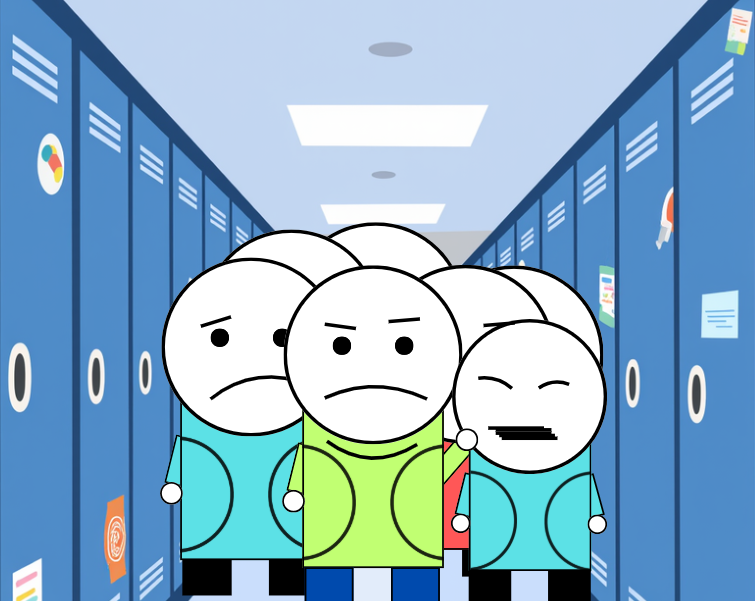
When people talk about overcrowding, they usually think of too many students in one place. At Edison High School, that is definitely true. Classrooms are full, hallways are packed, and lunch is noisy. But overcrowding is more than just having too many people. Instead, it is about time, and frankly, stress. At Edison High, we are not just sharing space. We are competing for time.
The schedule looks fine on paper, with 43-minute classes, five minutes between, and lunch in the middle of the day. But in reality, problems persist when there are more than 2000 students in a building built for fewer.
In class, a lot of time is wasted without anyone meaning to. Taking attendance takes longer because there are so many students. Getting everyone quiet takes longer because there are more conversations, backpacks, and movement. By the time the lesson starts, much of the critical 43-minutes has already been eaten into. Teachers try to explain, but with so many students, they cannot answer all the questions. Lessons get rushed, and students are expected to figure out the rest at home. In Algebra 2, for example, if the teacher goes over a problem and ten students have questions, there is not enough time for everyone to receive an answer. Some students just copy the notes and hope they understand them later. This scenario would not happen in a smaller class where teachers could focus on a smaller group collectively.
The hallways at Edison show the problem from a different perspective. In most scenarios, if a hallway is crowded, people slow down and accept it. At school, students are still expected to get to class on time, even when hundreds of students are trying to move at the same time. Passing periods feel like rush hour.
Students bump into each other, wait for doors, and try to find lockers while the time counts down and the bell threatens to sound. Many end up being late even when they are running as fast as possible. It is not their fault, but it feels like they are being punished because of the crowd. Friends often sprint from the cafeteria to History class just to make it on time, and sometimes barely get a chance to open their books before class starts.
Meanwhile, the lunch period is supposed to be a break, but at Edison High, it hardly feels like one. Lines at the cafeteria are long, and getting food takes time. Finding a seat is another challenge because tables fill up fast. Conversations get cut short, and students often have to eat while standing or rush to finish before the bell rings. Even the time to relax is crowded. The break that is meant to encourage energy and focus only adds more stress.
Overcrowding also affects the time teachers and counselors can give each student. At Edison, teachers have dozens of students per class and hundreds overall. Typically, when someone needs help, the people around them find time to assist. However, in school, teachers cannot do that for everyone. Counselors are responsible for so many students that meetings feel short and rushed. Important decisions about college, schedules, or grades get squeezed into brief conversations because there is no time for more. Students start to feel like asking questions is a burden and stop asking altogether.
After a while, students get used to moving fast and stressing silently. They stop asking questions, start rushing everything they do, and always feel behind. That becomes the new normal, despite the exhaustion. Overcrowding at Edison is not just about space. It is about time packed too tightly. Until schools make room with longer periods, realistic passing times, and real breaks, overcrowding will remain a problem, no matter how big the building is.