
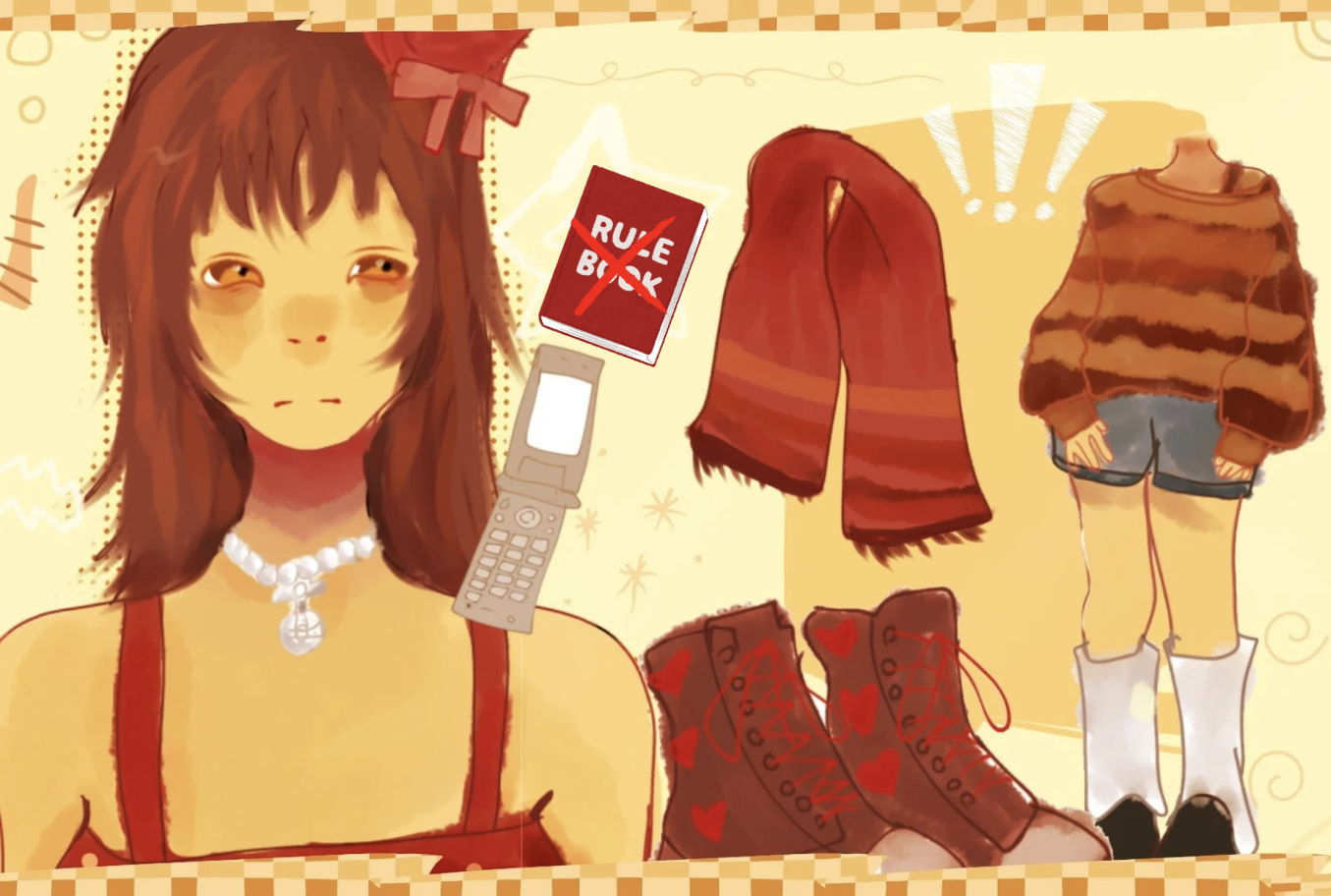
From the very start, fashion has always been a part of me; from a bright, big baggy t-shirt with high-rise mom jeans to the tight-fitted tops with low-rise baggy jeans that I acquired years later. I have always felt the need to follow these new standards when it comes to fashion.
Fashion first piqued my curiosity when I entered middle school. Even as a young child, I have always been timid and felt too shy to speak out. But through the internet, I found myself indulging in the fashion world. It was a way to express myself to people without having to speak up.
As I went further into the fashion world, there was always a mention of how clothes should be worn. I constantly heard phrases like “You can’t wear that” or “Those colors should not be worn together.” There was never a proper reason why, just society’s expectations.
For many people, including me, fashion is a form of self-expression. For example, a Japanese style known as Harajuku is known for its focus on individuality. The style is characterized by a mix-and-match approach of different items, featuring bright colors like pink and purple. In the streets of Harajuku, Japan, you may see people in poofy tutus, bows, clips, and sporting brightly colored hair. During the 1970s and 1980s, many Japanese girls used this style to break social norms. At this time in Japan, the standard for Japanese women was stringent. Many women had to follow certain rules about their hair, makeup, and wardrobe. The Harajuku movement was a major step for many young girls and women in Japan in breaking these traditional norms.
Fashion, in other words, is not just about looks, but the meaning and impact behind your choice of clothes.
In addition to breaking social norms, people should be wary of the fashion warnings that prevail. On social media, users may hear phrases like “brown and black don’t go together” or “black and navy should not be paired.” Society often places this expectation on others.
Personally, when I go on social media, I often see huge headlines with words like “Worst Fashion Pieces of the Year” or “Clothes Women Over the Age of Thirty Should Not Wear.” Although these headlines and words seem like superficial content, they put pressure on people to dress a certain way. If fashion creates meaning, then these ideas limit freedom of expression and the creativity of the people.
Of course, these opinions can be personal, but they shouldn’t be harshly blasted to the public in a way that makes people feel obligated to follow them. People tend to feel forced into these trends as more and more of these words appear and trend.
However, to many people, fitting in is not the goal of fashion. Many dress up solely for comfort. When people set rules, such as “you shouldn’t wear baggy clothes on top of baggy clothes,” it diminishes the sense of comfort people have with clothes and their identity.
I myself have days when I dress down, and many times I wonder if people will judge me. For others, they may feel the same way, especially with society putting attractiveness and beauty on such a high pedestal. Throughout the years, I have learned to set those thoughts and standards aside by wearing what I want, but of course, there will always be people who disagree.
In fashion, people will always have their takes. Some people say there should be at least some standard when it comes to fashion, and of course, this is true to an extent. In a sense, someone’s outfit should be appropriate and fitting for the occasion. But when it comes to day-to-day life, like shopping, walking, or hanging out with friends, there shouldn’t be a strict dress code.
When a person does not follow these “rules,” many claim they are outdated. The idea of being outdated is different from person to person, especially now that trends change faster than ever. Old trends are always getting recycled back into the cycle, so it is difficult to classify someone as old-fashioned or outdated.
After all, the fashion cycle is just a reflection of what we like. It’s your choice whether to keep those bright, baggy t-shirts or those low-rise, baggy jeans, as the fashion cycle depends on you.