
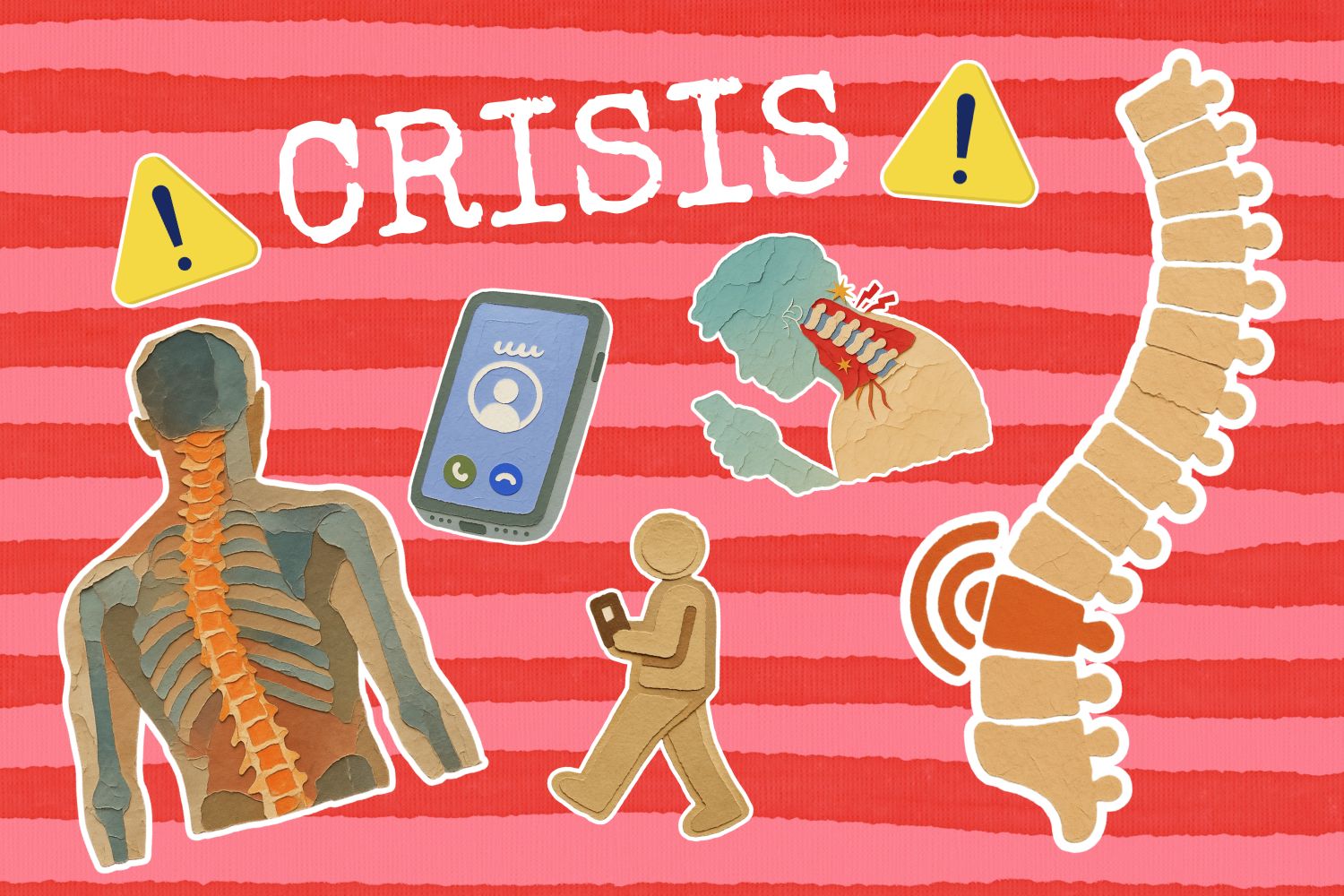
Take a glance anywhere, whether it’s the bustling hallways of Edison High, an overcrowded NJ Transit train coach, or even the jam-packed auditorium of study hall; and you are guaranteed to find the same, silent, steady epidemic manifesting itself. Heads bow and shoulders hunch as eyes lock onto the glowing blue rectangles held firmly in the palms of hands.
Although technological innovation continues to create interconnectedness in unparalleled ways, it also takes an irreversible physical and mental toll on the human body, redefining the basic structure of human stature in both a literal and figurative way.
According to UT Southwestern Medical Center, the average human head weighs approximately ten to twelve pounds when in a neutral, upright position. However, as a student’s neck tilts forward to scroll through Instagram reels between periods or to watch YouTube videos in the cafeteria during lunch, the gravitational pull on the cervical spine becomes significantly amplified.
Mr. Francis Eckert, a physical education teacher at Edison High, recognizes this phenomenon.
“Normally, when you use your phone for a long period of time, you may be leaning over, which adds more pressure to your neck and back,” said Eckert.
At a forty-five-degree angle, standing as the common posture of a smartphone user, the neck is forced to support nearly fifty pounds of pressure. This unnatural burden strains the surrounding muscles, stretches ligaments, and, over time, takes a lasting toll on the spine’s structural integrity.
Though poor posture does not necessarily cause scoliosis, a condition that involves an abnormal curvature of the spine, the pressure of the cervical spine coupled with these unnatural postures can worsen pain from scoliosis. This added strain is only compounded by another staple of student life: the overstuffed backpack.
“Heavy backpacks are terrible for your neck and back, especially if they’re worn often and for long periods of time,” Eckert emphasizes. “I would recommend packing smarter or utilizing your locker if need be.”
Besides the toll on the skeletal system, a significant cost is also incurred internally. As the body’s chest cavity curves inward, causing shoulders to slump over a desk or iPhone screen, this unnatural posture forces the ribcage to contract, physically limiting the lungs’ ability to expand. The end result is shallow breathing, limiting the amount of oxygen reaching the brain, heart, and the rest of the body.
This diminished supply of oxygen in the bloodstream not only causes a drain on energy but also results in greater fatigue, difficulty concentrating, and increased stress levels. In other words, an entire generation is depriving itself of its energy by bowing down.
So why is posture so important? First and foremost, it’s an integral part of one’s well-being. When the spine is properly aligned, all biological processes in the body, from the nervous system to digestion, can function smoothly without any trouble. With good posture, the body’s weight is properly supported by the skeletal system as designed by nature.
“I believe good posture helps with your overall health. Students should definitely stretch more on a daily basis to improve their flexibility and help with their overall breathing as well,” said Eckert.
Moreover, posture also plays a key role in mental well-being since standing upright is a biological sign of confidence and preparedness. In light of the amount of access to gadgets and devices teenagers are granted, and since these ages also correlate to growth and development, it comes as no surprise that tension headaches, poor vision, chronic back pain, and the phenomenon “tech neck” are no longer ailments reserved for a small portion of the population.
Though the long-term consequences of posture problems might not appear at a teenage level as of now, they are undoubtedly accumulating. Eckert points out that while he has not noticed a major increase in posture-related problems specifically at the high school level, it becomes more problematic with age.
“The older you get, I’ve seen many people experience neck pain and headaches,” said Eckert. “I’m not a medical professional, but it is clear that poor posture and cell phone/computer usage may be a contributing factor.”
Addressing this habit doesn’t mean completely abandoning the digital world, especially in today’s world. Rather, it demands a drastic change in how we physically approach technology. This starts with basic ergonomics. Instead of dropping your head to meet the screen, simple adjustments like raising your phone to eye level, using textbooks as stands for laptops, or simply relaxing your jaw and shoulder muscles during breaks can completely disrupt this cycle of muscular strain.
Eckert offers advice for students looking to reset their posture during the school day: “Stay off your phone. Try to sit up straight and be engaged within your class.”
Every day, when students choose to roll their shoulders back, expand their chests, and lift their chins, they are pushing back against an unhealthy culture that encourages shrinking into the background. The daily grind of high school classes, exams, and extracurricular activities at Edison High is challenging enough without the added burden of an artificially compressed spine and an oxygen-deprived brain.
The cell phone age may have created a society that automates by looking down, but human anatomy was designed to look forward, an archetype that has been valid for over 300,000 years. The next time a notification buzzes in a crowded hallway, take a brief pause before collapsing inward. Lift your screen, align your spine, and keep your gaze steady.